Category Teaching Tips

Enhancing Connection and Flexibility: Integrating Optional Synchronous Sessions into Asynchronous Online Courses

Young adult students sitting outside and working on a project. One student holds a laptop.

While many courses at UAF are offered and listed as asynchronous, nothing prevents the incorporation of optional synchronous sessions. This teaching tip offers advice on a variety of different kinds of synchronous activities that you might consider as adding to your course as supplemental ways for students to connect with each other, you, and the content.

Q&A on AI Text Detection

A student working on a laptop in a cabin while a humanoid robot leans over his shoulder.

Are there any tools that can reliably detect if writing was created with artificial intelligence? No. No, There are no tools which can reliably detect AI-generated writing. This teaching tip covers the current state of automatic AI detection and where it falls short of being reliable, and illustrates why this trend will continue. More importantly, this teaching tip presents some methods in which faculty content experts can determine if writing has been created with AI.

Slow Pedagogy

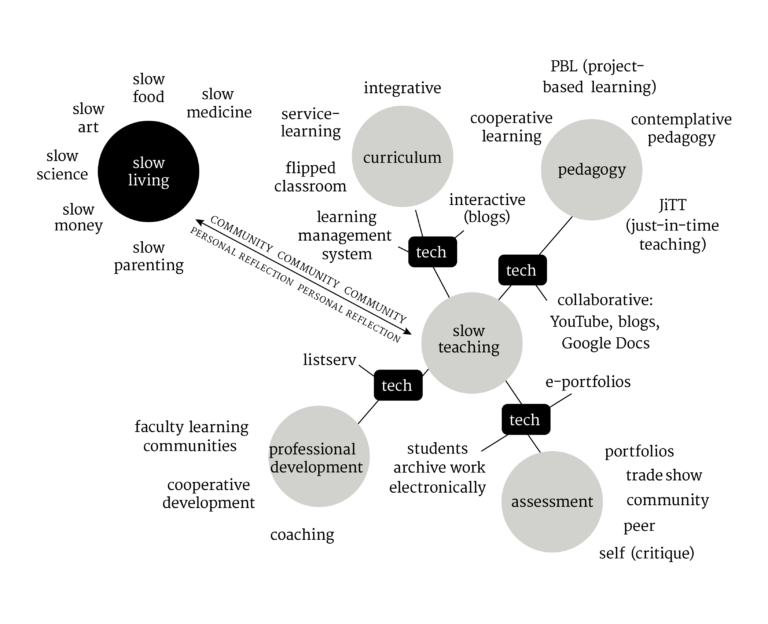
Caption: A Possible Framework for Slow Teaching with Technological Enhancements from Shaw, P. A., & Russell, J. L. (2013). 19 Determining Our Own Tempos. To Improve the Academy: A Journal of Educational Development, 32. http://dx.doi.org/10.3998/tia.17063888.0032.023

Slowing down the teaching and learning process can be a challenging endeavor amongst the business of modern academic life. Slow pedagogy is a teaching movement that offers a lens and practices for reducing the pace and pressure of education. Slow pedagogy suggests that taking one’s time can offer opportunities for deeper learning and connections.

Some perspective on the new UAF RSI checklist

A diagram showing the four aspects of RSI as interlocking puzzle pieces

This teaching tip serves as an introduction to the concept of Regular and Substantive Interactions, part of new Federal regulations concerning online education, and offers helpful and specific advice to instructors who are looking to transform their current course into one that not only meets the new regulations, but also increases student success, all while being efficient with the instructor's time.